Ohrid
Properties for sale and rent, plus guides about living in Ohrid. No live listings yet.
Overview
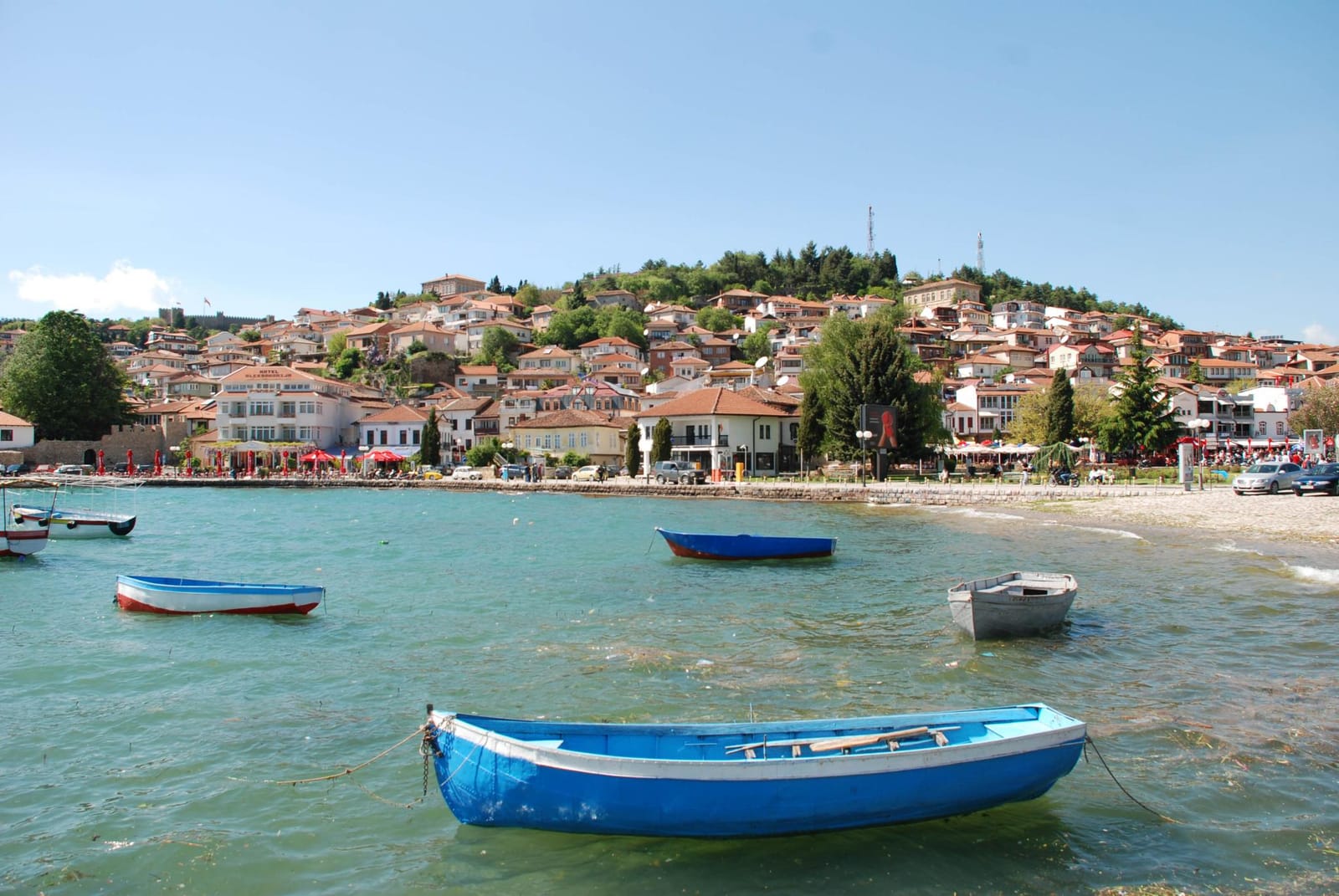
Ohrid is a historic town in the south-west of North Macedonia, set on the north-eastern shore of Lake Ohrid close to the border with Albania. The lake is one of the oldest and deepest in Europe, and the combination of the water, the surrounding hills and the layered old town has shaped the place for centuries. Ohrid is the best-known destination in the country and the centre of its summer tourism.
The town and its lake are inscribed as a UNESCO World Heritage Site for both their cultural and natural value — one of a small number of sites recognised on both counts. That status reflects the concentration of churches, the archaeology and the ecology of the lake, and it shapes how the old town and the shoreline can be used and built on.
The area and neighbourhoods
The old town rises in tiers from the harbour up towards the hilltop fortress of Tsar Samuel, a tight weave of narrow lanes, traditional houses with overhanging upper storeys, and churches built over many centuries. The lakeside church of Sveti Jovan Kaneo, standing on a bluff above the water, is the image most associated with Ohrid, while the larger church of Sveta Sofija and the early Christian and Roman remains, including the ancient theatre, sit within the same compact historic core.
Below and around the old town, the modern part of Ohrid spreads along the shore and inland, with the main promenade, harbour and bazaar forming the everyday centre. The lakeside continues south towards the monastery of Sveti Naum near the Albanian border, passing villages and beaches along the way, and the wider area takes in agricultural land and the slopes that climb towards the Galičica range separating Lake Ohrid from Lake Prespa.
The monastery of Sveti Naum, at the southern end of the lake, is one of the most visited sites in the area, set above springs that feed the lake; between it and the town a string of resorts, villages and beaches line the shore. North of Ohrid the lake continues towards Struga, where the Black Drin river flows out, so the two towns effectively share the lakefront and many visitors treat the whole shore as one destination.
Property market
Property in Ohrid spans several quite different types. Within the old town there are traditional stone and timber houses, many of them protected, where any restoration has to respect heritage rules and is correspondingly more involved. Along and back from the shore there are apartments, including newer developments, and in the surrounding villages there are houses and plots of land in more rural settings.
Because Ohrid is a tourism town, a share of demand comes from buyers interested in holiday homes or properties that can be let to visitors during the warmer months, alongside people buying to live there year-round. Heritage protection, the seasonal rhythm of the town and the desirability of lake views are all factors a buyer should weigh. As elsewhere in the country, condition varies, title and boundaries are worth checking carefully, and properties closest to the water and the old town tend to attract the most interest.
Lifestyle and getting around
Life in Ohrid is closely tied to the lake. In summer the town is busy with visitors, the promenade and beaches are the focus of activity, and boats run across the water and down to Sveti Naum; the Ohrid Summer Festival brings music and performance to historic venues. Out of season it becomes a much quieter provincial town, which many residents value, with the lake, the churches and the surrounding hills still at the centre of daily life and weekend walks.
The town has a small airport that operates seasonal and some year-round flights, and road connections lead north to Struga and on towards Kičevo and Skopje, and south along the lake. Within Ohrid the old town is best explored on foot, given the lanes and gradients, while the newer parts are served by local roads and buses. For buyers, the appeal is a setting of real natural and historic interest with the practicalities of a functioning town, balanced against the seasonality that comes with a lakeside destination.
For anyone weighing a move here, it is worth being clear-eyed about that seasonality. Ohrid in July is a different place from Ohrid in January: trade, transport and the general level of activity all rise and fall with the tourist season. For some buyers that contrast is exactly the appeal — a lively summer followed by a calm, low-cost winter by the lake — while for others, especially those who would live there year-round, the quieter months and the more limited off-season services are something to plan around. Either way, spending time in the town in more than one season before buying is sound advice.