Štip
Properties for sale and rent, plus guides about living in Štip. No live listings yet.
Overview
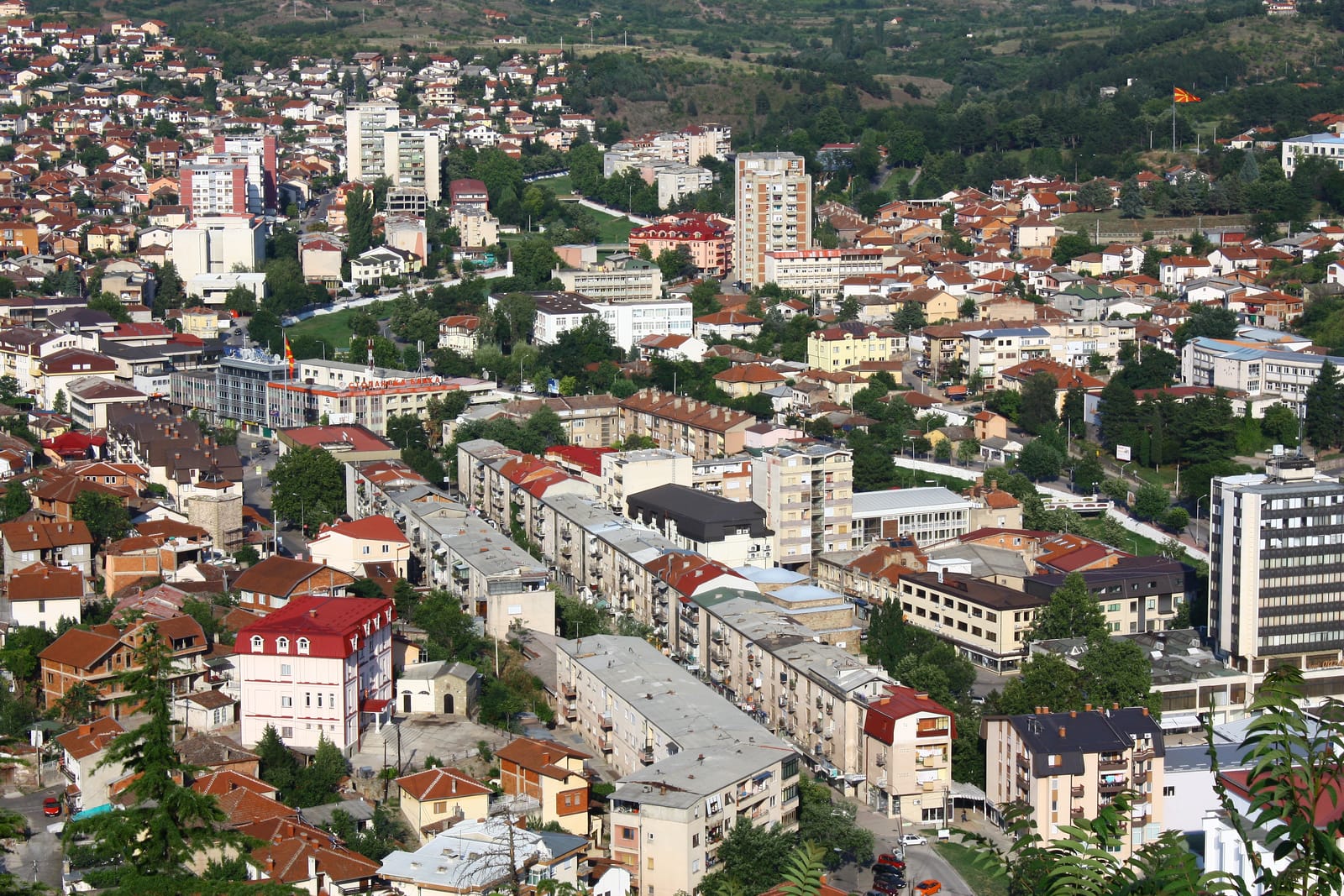
Štip is the main city of eastern North Macedonia, set on the rivers Bregalnica and Otinja in the hilly country of the east, between the Ovče Pole plain and the surrounding valleys. It is the largest urban centre in this part of the country and serves as the economic, industrial and educational focus for the eastern municipalities. The rivers, the hills and the fortress that rises above the town are central to its setting.
Štip is closely associated with two things in particular: textiles and students. It is the country's principal centre of textile and clothing manufacture, an industry long woven into the city's economy, and it is home to the Goce Delčev University, the main public university in eastern Macedonia, which brings a large student population and gives the city a noticeably young, lively character for its size.
The area and neighbourhoods
The centre of Štip lies along the rivers, with the main square, shopping streets, market and cafés, and the older quarters spreading up the slopes nearby. Rising above the town is the Isar, a fortified hill crowned by the remains of a medieval fortress, with churches on its flanks and wide views over the city and the river valleys below. The Isar is the city's defining landmark and a place to climb for the outlook over the surrounding country.
Around the centre and the Isar, Štip spreads into residential districts of houses and apartment blocks, with the university campuses adding to the life of the city. Beyond the built-up area the land opens into the hilly terrain of the east, the Bregalnica valley and the Ovče Pole plain, an agricultural region. The rivers Bregalnica and Otinja, which meet near the city, run through this landscape and have shaped the site of the town since antiquity.
The combination of the fortified hill, the rivers and the surrounding valleys gives Štip its particular feel, while the textile industry and the university give it its working and youthful identity. It is a regional capital for the east — a centre of industry, education and services rather than a tourist town — with a long history reflected in the Isar and the older churches, and the energy that a large student body brings to a city of its scale.
Property market
Property in Štip ranges from apartments in the centre and the surrounding blocks — including older stock and newer construction — to family houses in the residential districts and the nearby villages. As a sizeable regional city with a substantial student population, there is steady demand for rental flats alongside homes for owner-occupiers, and the spread of stock reflects a market grounded in local and regional needs rather than in tourism.
Demand is underpinned by the city's role as the economic and educational hub of the east, by its textile and other industries, and by the thousands of students drawn to the university, who support a rental market in particular. Prices and choice reflect that locally based demand. As anywhere, buyers should check the condition and legal status of both older and newer buildings, confirm title and boundaries, and weigh a central apartment — perhaps with letting in mind given the student population — against a quieter house in the residential districts.
Lifestyle and getting around
Everyday life in Štip centres on the square, the riverside, the market and the cafés, with the student population giving the city a livelier social scene than many towns of its size. The Isar fortress is the obvious destination for a walk and the views, and the rivers and surrounding hills provide the outdoors close at hand. The city has the cultural events and institutions of a regional centre, and is well known within the country for its summer music festival.
Štip is connected by road and rail to the rest of the country, sitting on the eastern routes that link it through the centre towards Skopje and out across the east. The centre, along the rivers, is largely walkable, while the older quarters climb towards the Isar. For buyers, the appeal is the main city of eastern Macedonia — a working centre of textiles and learning, with a fortress and rivers at its heart, a young population and the services and connections of a regional hub.
Among the towns of the east, Štip stands out for its size, its industry and the presence of the university, and those are much of what defines it for buyers. Its strengths are the breadth of services and the steady, student-supported market that come with being the regional capital; in return, it is a working and educational city rather than a scenic or tourist-oriented one. For anyone whose priorities are amenities, connections and a lively centre in the east, that combination is the attraction.